Galvanized Pipes in Older Salt Lake City Homes
Why this is a Salt Lake question
Salt Lake City has a lot of old housing in good condition. The Avenues, the city's oldest residential historic district, was built from about 1860 to 1930. Yalecrest was built mostly between 1920 and 1940, with 22 subdivisions platted between 1910 and 1938 according to the city's historic preservation office. Sugar House, Liberty Wells and the streets near Westminster have plenty of houses from the same decades. Houses of that era were commonly plumbed with galvanized steel supply pipe, and plenty of it is still in the walls.
How to tell what you have
Look where the water comes in
In the basement, find the main shutoff on the foundation wall. The pipe on the house side of it tells you a lot. Then look at the pipes on top of the water heater.
The magnet test
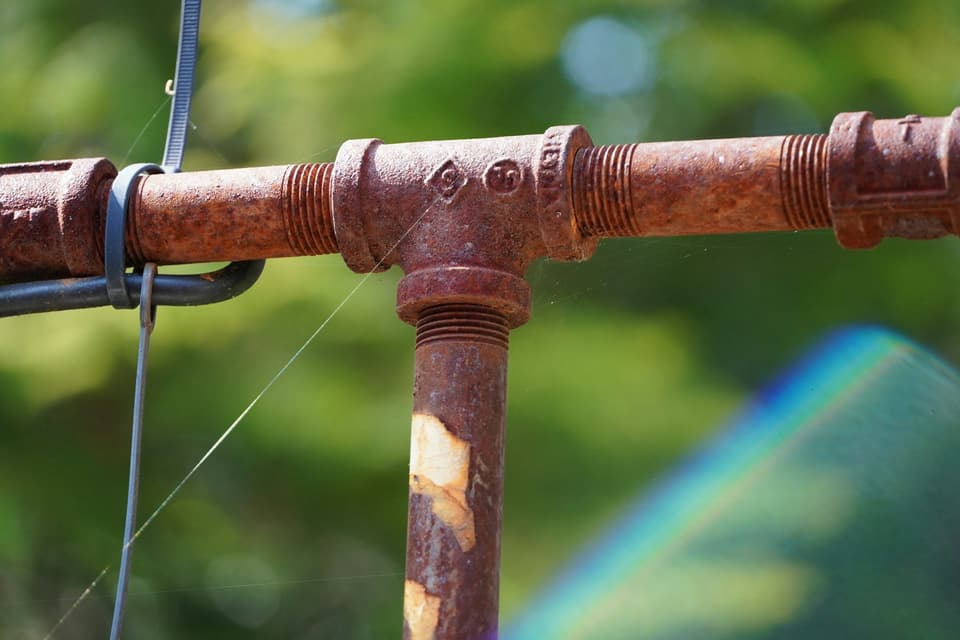
Galvanized steel is dull grey, threaded at every joint, and a magnet sticks to it. Copper is orange-brown or green with age, soldered rather than threaded, and does not attract a magnet. PEX is coloured plastic tubing.
Expect a mix
Most old houses have been partly replumbed. A galvanized trunk line feeding copper branches added in a 1970s bathroom remodel is common, and so is the reverse.
The symptoms
- Low pressure that is worst at the fixtures farthest from the main, often upstairs
- Brown or rusty water after the house has been empty for a few days
- Pressure that drops sharply when two fixtures run at once
- Leaks at threaded joints, often where galvanized meets copper
- Aerators and shower heads that clog with rust flakes as well as white scale
Why it fails from the inside
The zinc coating on galvanized pipe wears away over decades, and the steel underneath rusts. Rust builds up on the inner wall and narrows the opening. Salt Lake's hard water adds mineral deposits on top. By the time a hundred-year-old line leaks, the bore is often a fraction of its original size, and the threads at each joint, where the wall was cut thinner, are the weakest points.
Where galvanized pipe joins copper without a proper dielectric fitting, the two metals corrode each other faster. That joint is a common leak point in remodelled older houses.
The service line is a separate question
The pipe from the city main to your house is not the plumbing inside. Salt Lake City Public Utilities has completed an initial lead service line inventory and publishes a service line material map, so you can look up what the city has on record for your address. The city also reports over $39 million in federal loan funding to help residents replace lead service lines. Check the map before a repipe, and ask the plumber about the service line at the same time.
Spot repair or repipe
A single leak on an otherwise sound system can be repaired. But spot repairs on galvanized lines tend to move the problem along: the work disturbs rust that clogs fixtures downstream, and the next joint is often as thin as the one that failed. If pressure is already poor and the house is past seventy or eighty years old, a repipe usually costs less over five years than a string of repairs.
In plaster-walled Avenues and Yalecrest houses, ask how the plumber plans to route the new pipe and who patches the openings. PEX can often be pulled through existing cavities with fewer openings than rigid copper.
Where to go next
Common questions
Is galvanized pipe dangerous?
It mostly causes low pressure, rusty water and leaks. Older galvanized lines that were once downstream of lead pipe can hold lead in their scale, which is one reason to check the city’s service line material map.
How long does galvanized pipe last?
Often cited as 40 to 70 years. Many lines in Salt Lake’s older neighbourhoods are well past that and still in service, usually with poor pressure.
Can I replace just the worst sections?
You can, and it buys time. Disturbing old galvanized often loosens rust downstream, and the next joint tends to fail soon after.