Frozen Pipes in Salt Lake City: Where They Freeze and What to Do
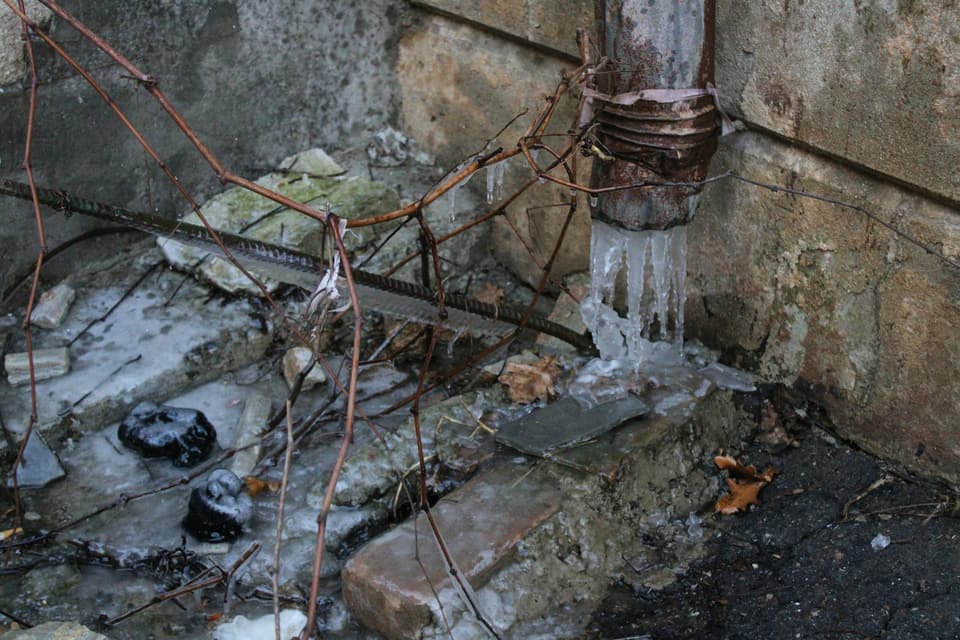
Start with the frost line
Salt Lake City's building design criteria set the frost depth at 30 inches. That is how deep footings must go so the ground below them does not freeze, and it is a useful rule for pipes too. A water service line, a sprinkler main or a line to a detached garage buried shallower than that is at risk in a long cold spell.
The places inside a house that freeze first
Crawl spaces
Common under East Bench ranch houses, older additions and much of West Valley City. Cold air comes in through foundation vents, and the pipes nearest them freeze first. Close the vents for winter if the house has them, and make sure the pipe insulation is still on the pipe.
Exterior walls
Kitchen sinks under a window on an outside wall are the classic case. The cabinet doors stay shut, the warm air from the room never reaches the pipe, and the supply lines freeze inside the cabinet.
Garages
Lines that run through an unheated garage to a laundry or a bathroom above it, and water heaters and softeners kept in garages, are exposed every time the door is left open on a cold night.
Hose bibs
A frost-free hose bib keeps its valve inside the warm wall and drains the stem when you close it. With a hose still attached, the stem cannot drain, and the ice forms inside the wall where you will not see the split until the spring.
Before the first hard freeze
- Disconnect every garden hose and close any interior shutoffs to outside taps
- Have the sprinkler system blown out; protect or drain the backflow assembly
- Close crawl space vents and check pipe insulation
- Find the main shutoff and make sure it turns
- If you travel, keep the heat on and consider shutting the main off while away
During a cold snap
Open cabinet doors under sinks on outside walls. On the coldest nights, let a thin stream run from the faucet farthest from where the main enters, which keeps water moving through the most exposed pipe. Keep the garage door closed.
If a pipe has already frozen
If a tap gives a trickle or nothing on a cold morning while others work, that line is frozen. Open the tap so melting water has somewhere to go. Warm the pipe slowly from the tap end back with a hair dryer, a heating pad, or a space heater kept well clear of anything that can burn. Never use an open flame: torches start house fires in exactly these crawl spaces and walls.
If you cannot reach the frozen section, or it is already dripping, shut off the main before it thaws. A split pipe often does not leak until the ice melts, and then it leaks fast. The emergency page goes through the first ten minutes.
After it thaws
Check the whole run, not just the spot that froze. Look under sinks, in the crawl space, along basement ceilings and at the hose bib on the inside wall. Watch the water meter with every fixture off; if it moves, there is a leak somewhere. A pipe that froze once will freeze again unless something changes, so ask the plumber about rerouting, insulating or heat tape while the wall is open.
Where to go next
- Emergency plumbing: the first ten minutes
- Burst pipe repair and repiping
- Galvanized pipes in older homes
Common questions
What temperature do pipes freeze at in Salt Lake City?
There is no single number; it depends on how exposed the pipe is and for how long. Pipes in crawl spaces, garages and outside walls are at risk once nights stay well below freezing, which happens every Salt Lake winter.
How deep is the frost line in Salt Lake City?
Salt Lake City’s design criteria give a frost depth of 30 inches.
Should I drip my faucets?
On the coldest nights, a thin stream from the faucet on the most exposed line is cheap insurance. It is not needed on every tap.
Can I use a torch to thaw a pipe?
No. Open flames near wood framing and insulation cause house fires. Use gentle heat from a hair dryer or heating pad, or call a plumber.