Burst Pipe Repair and Galvanized Repiping in Salt Lake City
Two jobs that look different and often turn out to be the same one. A pipe splits in a cold snap, the plumber opens the wall, and finds galvanized steel from the 1920s rusted to half its bore.
Burst pipes: fixing the break
A split from freezing is usually a clean lengthwise crack or a fitting pushed off its joint. The repair itself is often quick: cut out the damaged section and join new pipe to the old with the right transition fittings. The larger work is finding all the damage, because a line that froze in one place may have frozen in two, and opening walls and ceilings to reach it.
Ask what caused the freeze, too. A pipe that froze once in an exterior wall or a crawl space will freeze again in the next hard January unless it is moved, insulated or heated. Rerouting a short run of pipe to the warm side of the wall while the wall is already open is often the cheapest permanent fix.
Where Salt Lake pipes freeze
- Crawl spaces under East Bench ranches and older additions, especially near open vents
- Kitchen sink supply lines on outside walls, inside closed cabinets
- Lines through unheated garages to a laundry or a second bathroom
- Hose bibs left with a hose attached
- Service and irrigation lines buried shallower than the city’s 30-inch frost depth
Galvanized pipe: how to tell what you have
Galvanized steel pipe is grey, threaded at every joint, and a magnet sticks to it. Copper is orange-brown and does not take a magnet. PEX is plastic tubing, usually red, blue or white. In many older Salt Lake houses you will find a mix: a galvanized trunk line with copper or PEX added in later remodels. The places to look are where the main enters the basement and at the top of the water heater.
The Avenues, built from about 1860 to 1930, and Yalecrest, built mostly 1920 to 1940, are where original galvanized lines are most likely, along with pre-war homes across Sugar House and Liberty Wells. Rose Park and the post-war East Bench were built later, but many still have galvanized sections.
Why patching galvanized rarely ends well
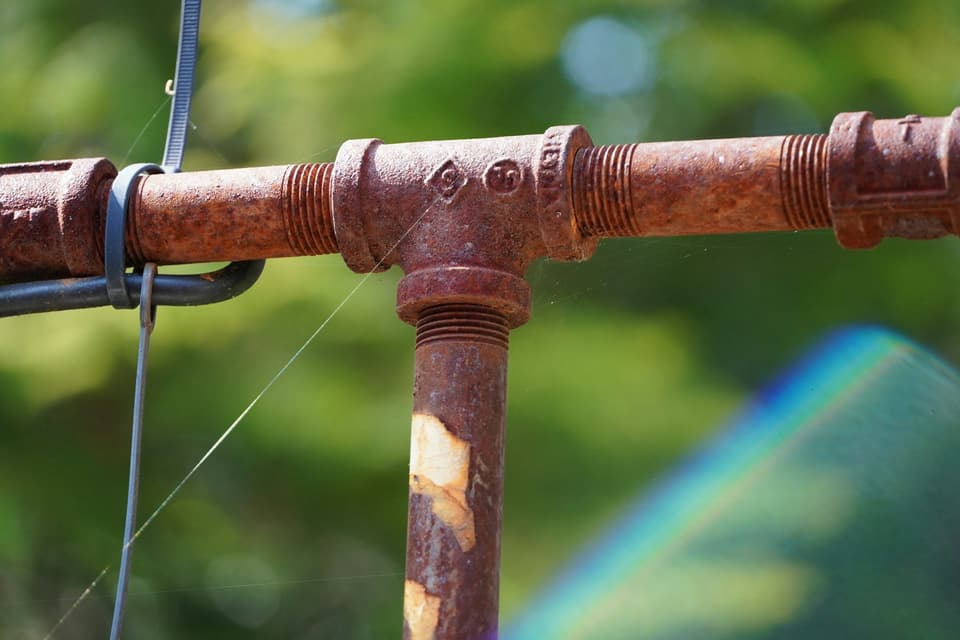
Galvanized pipe rusts from the inside, so the outside looks fine while the bore closes. Disturbing one section to fix a leak often breaks loose rust that clogs aerators and valves downstream, and the threaded joint next to the repair is usually as thin as the one that failed. Owners of older houses commonly go through two or three spot repairs before deciding to repipe, and wish they had started there.
Repiping: PEX or copper
PEX
Flexible plastic tubing that can be pulled through walls with fewer openings, tolerates freezing better than rigid pipe, and costs less in materials and labour. Most whole-house repipes in older homes now use it. It must be kept out of direct sunlight and away from the first stretch above a gas water heater.
Copper
Long-lived and familiar, more expensive, and needs more wall openings because it is rigid. Some owners of historic houses prefer it where pipe is exposed in a basement.
Either way
A repipe usually replaces the supply lines from the main to every fixture, adds shutoff valves where there were none, and often replaces the main shutoff itself. Drain lines are a separate decision. Plaster walls in older houses take careful opening and patching, so ask who does the patching and whether it is in the price.
Check the service line too
The pipe from the city main to your house is a separate run from the plumbing inside. Salt Lake City has completed an initial lead service line inventory and publishes a service line material map on its utilities website, and the city has reported receiving over $39 million in federal loan funding to help residents replace lead service lines. Look your address up before a repipe; replacing inside pipes while an old service line stays in the ground leaves part of the problem in place.
What it generally costs
A single burst pipe repair is often a few hundred dollars for the plumbing, more when walls or ceilings must be opened, plus drying and drywall work that a plumber does not do. A whole-house repipe varies with the number of bathrooms, stories, and how hard the walls are to open. For a typical older Salt Lake home, expect a quote in the several-thousand to low five-figure range, and ask for it broken into supply piping, valves, permit, and wall patching.
Common questions
How do I know if my Salt Lake house has galvanized pipes?
Look where the main enters the basement and at the top of the water heater. Grey threaded pipe that a magnet sticks to is galvanized steel. Low pressure at upstairs taps and brown water after time away are common symptoms.
Is PEX allowed in Salt Lake City?
PEX is a standard material under the plumbing codes Utah has adopted and is widely used here. Installation rules apply, such as distance from gas water heater flues and protection from sunlight. The plumbing company and the permit inspection cover those.
Can a frozen pipe be thawed without bursting?
Often, if it has not split yet. Open the tap it feeds, then warm the pipe slowly with a hair dryer or space heater kept clear of anything flammable. Never use an open flame. If you cannot reach it or it is already leaking, shut off the main and call.
Does homeowner insurance cover burst pipes?
Sudden bursts are commonly covered and slow leaks are commonly not, but policies differ. Photograph the damage and the failed pipe before anything is thrown away and ask your insurer.
How long does a whole-house repipe take?
Typically a few days for the plumbing in an average house, with water restored each evening on a well-run job, then time for wall patching. Ask the company how they handle water service while the work is under way.
Other plumbing pages for Salt Lake City
- Plumber in Salt Lake City, UT
- Emergency Plumber in Salt Lake City
- Drain Cleaning and Sewer Lines in Salt Lake City
- Water Heater Repair and Replacement in Salt Lake City
- Water Softener Installation in Salt Lake City
Also serving
Burst Pipes & Repiping is available outside Salt Lake City too, across Millcreek , Holladay , South Salt Lake and West Valley City .
Ask about burst pipes & repiping
Describe the problem and a local plumbing company will call you to talk it through and arrange a visit as soon as their schedule allows. Answered Mon–Sat, 8am–6pm · ask about after-hours cover when you call You can also call (385) 406-3317. If water is running right now, call rather than typing.